
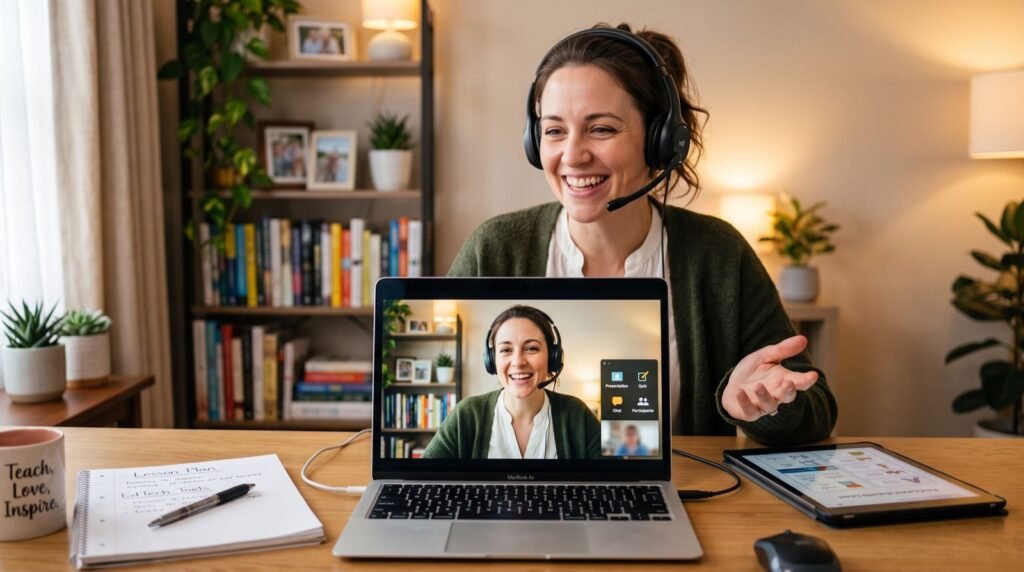
Home Tutoring vs Online Classes: 2026 Comparison
Parents comparing study options this year keep landing on the same question: is it worth paying more for in-person help, or does a well-run online program deliver the same results for less? The honest answer depends on the subject, the student’s age, and how much structure they need to actually sit down and focus.
This guide compares both formats directly, including when working with established home tutors in Islamabad still has a clear edge over a purely remote setup, and when it doesn’t.
What Home Tutoring Actually Offers
A tutor sitting at your kitchen table brings things a screen can’t fully replicate: immediate body-language feedback, zero technical friction, and a level of accountability that’s harder to skip. For younger students especially, physical presence reduces distraction in a way even the best video call struggles to match.
Home tutoring also allows faster adaptation. A good in-person tutor notices a confused expression mid-explanation and adjusts instantly, something that’s noticeably harder to catch over a laggy video connection.
What Online Courses Do Better
Online learning wins on flexibility and access. A family in a smaller city can book a specialist who simply doesn’t travel locally. Scheduling is easier, there’s no commute time eaten up on either side, and recorded sessions mean a student can revisit a tricky explanation days later instead of relying purely on memory.
Structured online courses also tend to be more affordable per hour than in-person equivalents, since the tutor isn’t factoring travel time into their rate. For self-motivated students, that savings can be reinvested into more hours of practice.
Home Tutoring vs Online: Which Gets Better Results?
Neither format wins universally — results depend heavily on the student. Younger children and students who struggle with focus tend to do measurably better with in-person sessions, where distractions are easier to manage and the tutor can read the room. Older students and self-directed learners, especially those preparing for a specific exam, often do just as well — sometimes better — with a flexible online schedule that lets them study at their peak focus hours.
| Factor | Home tutoring | Online classes |
|---|---|---|
| Best for age group | Younger students, easily distracted learners | Teens, adults, self-motivated students |
| Typical cost | Higher (travel included) | Lower per hour |
| Scheduling flexibility | Limited by tutor’s travel radius | Wide pool of tutors, any time zone |
| Session recording | Not usually available | Often available for review |
| Distraction control | Tutor manages environment directly | Depends on student’s home setup |
Signs You Should Choose In-Person Tutoring
- Your child is under 10 and loses focus quickly on screens.
- Previous online attempts ended in frequent cancelled or distracted sessions.
- You want a tutor who can also observe study habits and homework routines directly.
- Internet reliability at home is inconsistent.
Signs Online Classes Will Work Just as Well
- The student is a teenager or adult with self-discipline to show up and focus.
- You need a specialist subject or language not available locally.
- Budget matters, and travel-inflated rates aren’t worth paying.
- Flexibility around exams, work, or other commitments is a priority.
Why an Experienced Local Team Still Matters
Regardless of format, experience with the local curriculum and exam boards makes a measurable difference. A tutor — online or in-person — who has coached dozens of students through the same syllabus year after year spots patterns in common mistakes that a generic, internationally-focused platform simply won’t catch. This is true whether you’re hiring for academic tutoring, home improvement work, or any specialized service where an experienced local team consistently outperforms a one-size-fits-all provider parachuted in from elsewhere.
Research summarized by UNESCO’s education division notes that learning outcomes improve most reliably when instruction is paired with consistent, individualized feedback — a factor present in both strong home tutoring and well-run online programs, but largely absent from passive, unsupervised study.
How to Transition Between Formats Without Losing Progress
If you’re switching a student from one format to the other mid-year, the biggest risk isn’t the format itself — it’s losing continuity in what’s already been covered. Ask the new tutor, whether in-person or online, to review recent homework and test results before the first session rather than starting from a generic diagnostic.
A short overlap period, where the old and new tutor both work with the student for a week or two, also smooths the transition and gives you a direct side-by-side comparison of engagement and results before fully committing to the switch.
A Hybrid Approach for 2026
Many families this year are landing on a hybrid: in-person sessions for younger children or foundational subjects, and online sessions for exam prep, languages, or specialist topics that benefit from a wider talent pool. This blended model captures the accountability of home tutoring without losing the flexibility and cost savings that make online classes attractive.
If you’re unsure where to start, book a single trial session in each format for the same subject and compare directly. Most families find the right fit becomes obvious after one week, rather than after weeks of theoretical comparison.
Cost Breakdown: What You’re Really Paying For
It helps to separate what you’re actually paying for in each format, rather than comparing a single hourly number. Home tutoring rates typically bundle in travel time, fuel or transport costs, and the opportunity cost of a tutor only being able to see a handful of students per day within a limited radius.
Online rates, by contrast, reflect pure teaching time. A tutor working online can serve students across an entire city or country without travel eating into their schedule, and that efficiency is usually passed on as a lower hourly rate. Over a full school term, that difference can add up to a meaningful number of extra sessions for the same budget.
None of this means online is automatically “better” — a distracted eight-year-old left alone with a tablet will waste that budget advantage fast. The savings only matter if the format also fits the student.
Frequently Asked Questions
Is home tutoring more effective than online tutoring?
It depends on the student. Younger or easily distracted learners often do better in person, while self-motivated teens and adults frequently do just as well online.
Which option is more affordable long-term?
Online classes are usually cheaper per hour since there’s no travel cost built into the rate, making them more budget-friendly for regular, ongoing sessions.
Can online tutoring work for young children?
Yes, but it requires more parental involvement to manage distractions and keep sessions on track compared to an in-person tutor who manages the environment directly.
Should I switch from in-person to online tutoring?
If cost, scheduling, or access to a specialist is the main barrier, switching to online classes is often worth testing with a trial session before committing long-term.
Final Thoughts
There’s no universal winner between home tutoring and online classes — the right choice depends on your student’s age, focus level, and goals. Test both formats where possible, lean on tutors with real local experience, and let actual results guide the decision rather than assumptions about which format “should” work better.